
As an Amazon Associate I earn from qualifying purchases. This post may contain affiliate links. If you buy through them, we may earn a small commission at no extra cost to you.
Many of you often ask about the equipment I’m using in my videos, so this article is for you! Here I tell you exactly what I use, from brands to pricing, what I use them for and why I recommend them.
My Search for the Best of the Best
I’ve lived in shared houses, tiny flats, dark Victorian terraces, and I’ve built home studios in 5 different properties over the last 10 years. Music producer. Video editor. Working from home before it was trendy. Power cuts mid export are not fun. Not cute. Not vibey.
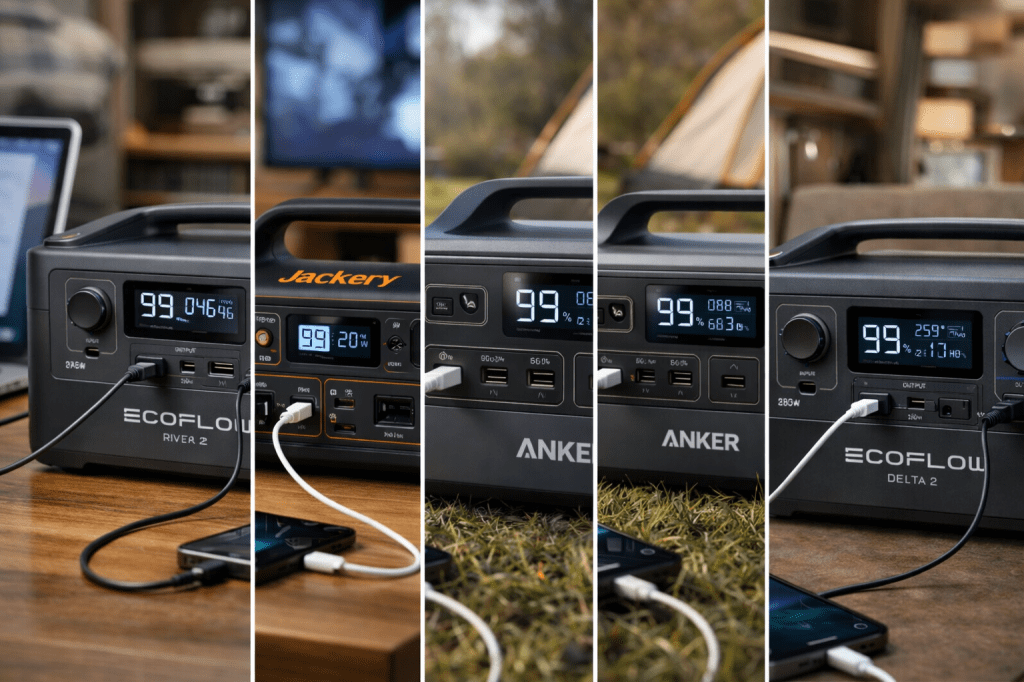
| Product | Positioning | Capacity & Output | Ideal For | Why It Stands Out |
|---|---|---|---|---|
| EcoFlow River 2 Pro | Best Overall | 768Wh • 800W | Home working, router + laptop backup, short outages | Fast charging, strong output for its size, reliable all round performance |
| Jackery Explorer 240 | Best Budget Under £300 | 240Wh • 200W | Router, phones, light use | Affordable entry point, simple to use, dependable for essentials |
| BLUETTI EB3A | Best for Apartments | 268Wh • 600W | Small flats, desk setups | Compact footprint, higher output than most in its size class |
| Anker PowerHouse 521 | Best for Camping | 256Wh • 300W | Camping, van trips, outdoor use | Durable build, trusted battery brand, easy to transport |
| EcoFlow DELTA 2 | Best High Capacity for Home Backup | 1024Wh • 1800W | Fridge, home office, multi device backup | High output, expandable capacity, suitable for serious outages |
I started with the cheap stuff. The questionable extension leads. The budget UPS units. Through years of trial and error I’ve found what’s actually worth it. These are the portable power stations I would genuinely buy again.
Why Quality matters
When you work from home, bake a sourdough that needs timing, or you’re exporting a 4K edit at 98 percent, power stability is everything.
Cheap batteries sag under load. Good ones hold voltage steady. That difference is the line between saving your session or corrupting it. Incredddible how much stress a good power station removes.
Best Overall
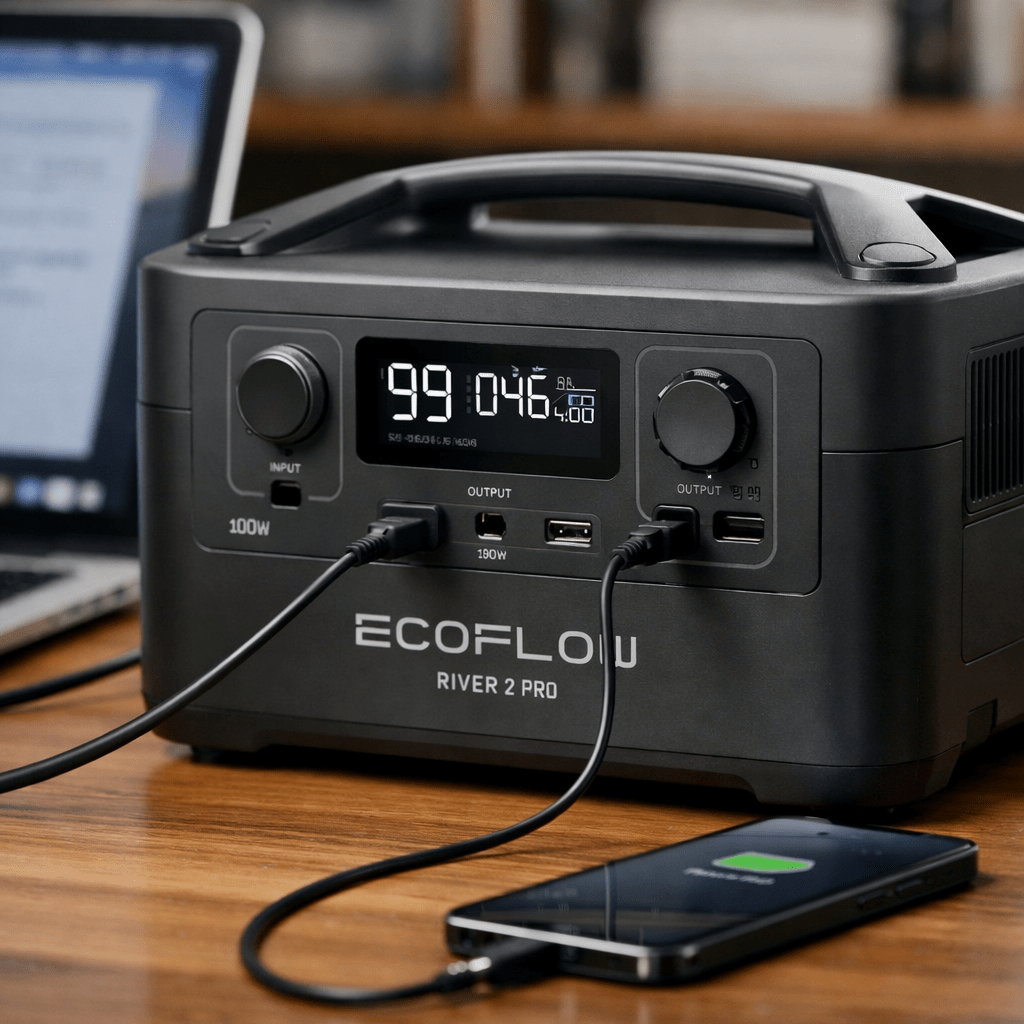
EcoFlow River 2 Pro Portable Power Station
Compact but powerful at 768Wh with 800W output. Fast charging, proper pure sine wave inverter and lightweight enough to move between rooms. I’ve tested similar units in studio setups and this level of output comfortably runs a laptop, audio interface and monitors without flinching.
Best for:
Home workers, creators, router plus laptop backup, short power cuts, camping with actual appliances.
Things to keep in mind:
Won’t run high draw kettles or ovens for long. Premium price compared to entry level units.
Best Budget Under £300
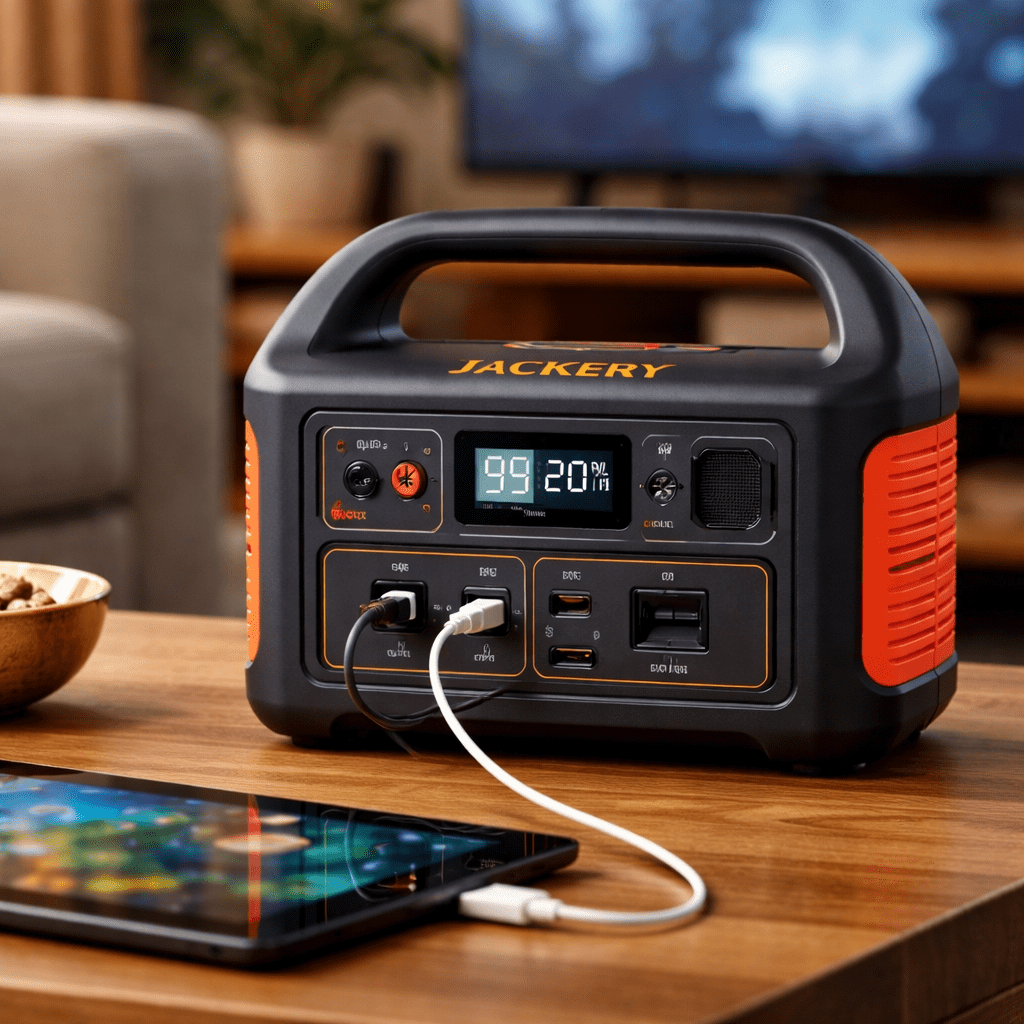
Jackery Explorer 240 Portable Power Station
Simple, reliable, and does the basics well. Around 240Wh capacity. This is the one you buy to keep WiFi alive and your phone charged during outages. Not flashy. Just works. For shared houses where budgets are tight, this is solid.
Best for:
Router backup, charging phones, tablets, small lamps, light camping use.
Things to keep in mind:
Limited capacity. Not designed for fridges or high wattage appliances.
Best for Apartments
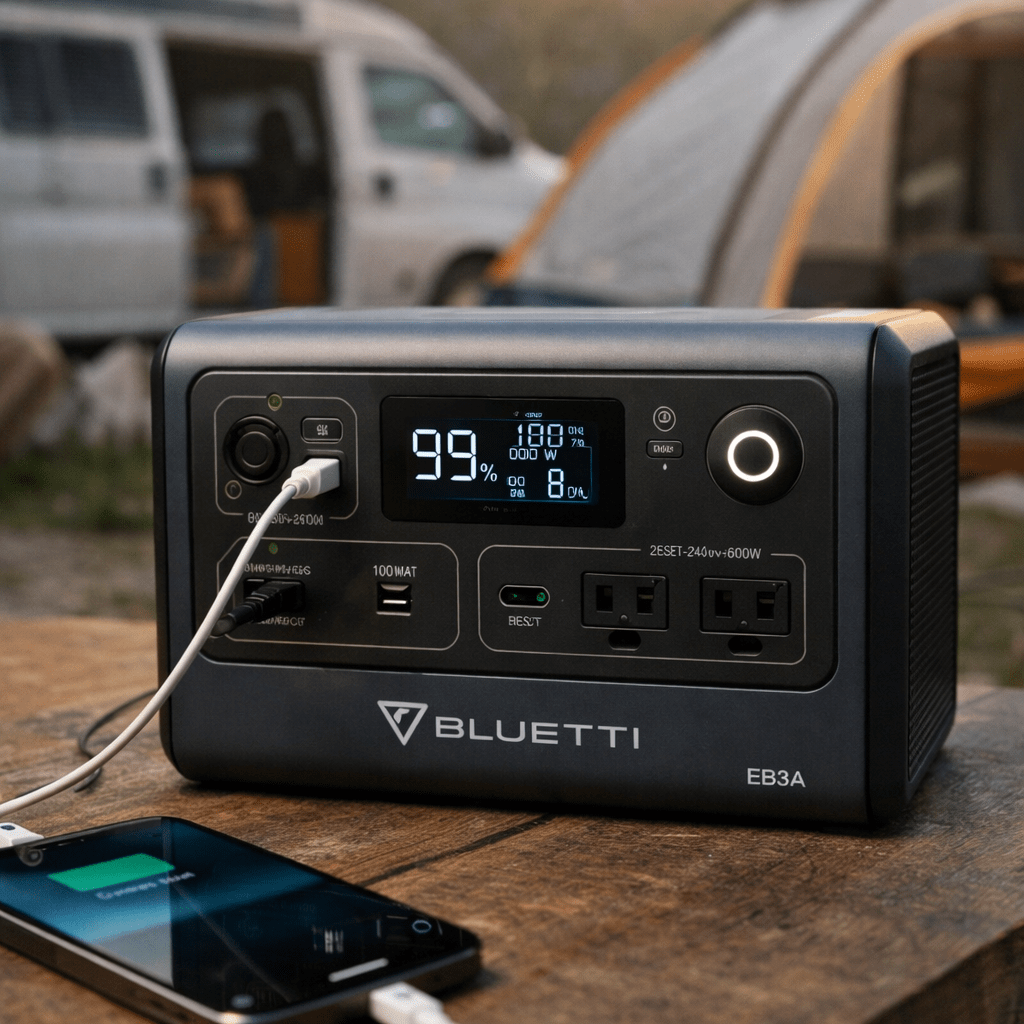
BLUETTI EB3A Portable Power Station
Small footprint, 268Wh capacity, 600W output. Perfect for apartment living where storage matters. Fast recharge and app monitoring. I love how compact this is. In small Barcelona flats or UK rentals this is a GAME CHANGER for desk setups.
Best for:
Apartment dwellers, remote workers, compact home office backup.
Things to keep in mind:
Still limited runtime for larger appliances. Best used strategically.
Best for Camping
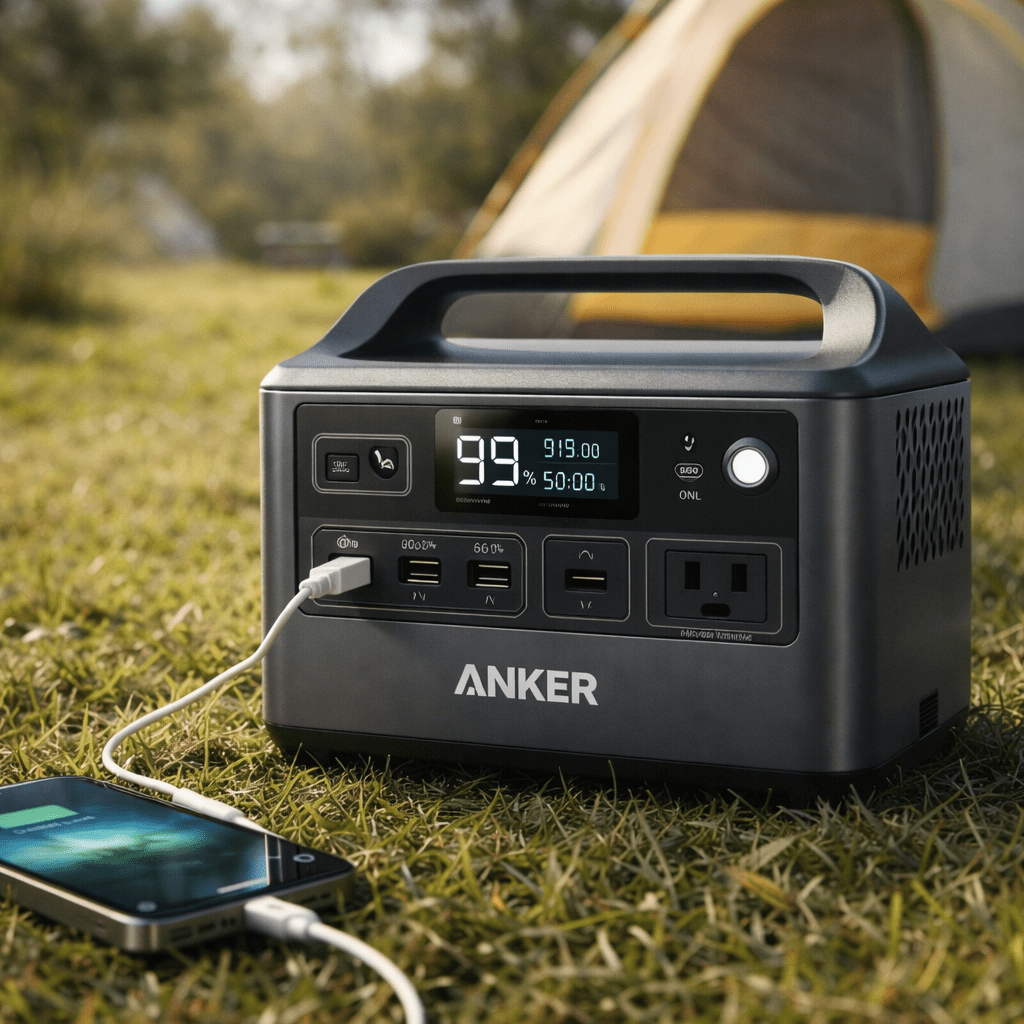
Anker PowerHouse 521 Portable Power Station
Portable, durable and very user friendly. Around 256Wh capacity with strong build quality. Anker batteries have been solid in my experience over years of tech use. Great for lights, mini coolers and charging gear off grid.
Best for:
Camping, van trips, outdoor cooking setups, powering small kitchen gadgets while travelling.
Things to keep in mind:
Not intended for extended home backup. Think weekend, not week long outage.
Best High Capacity for Home Backup
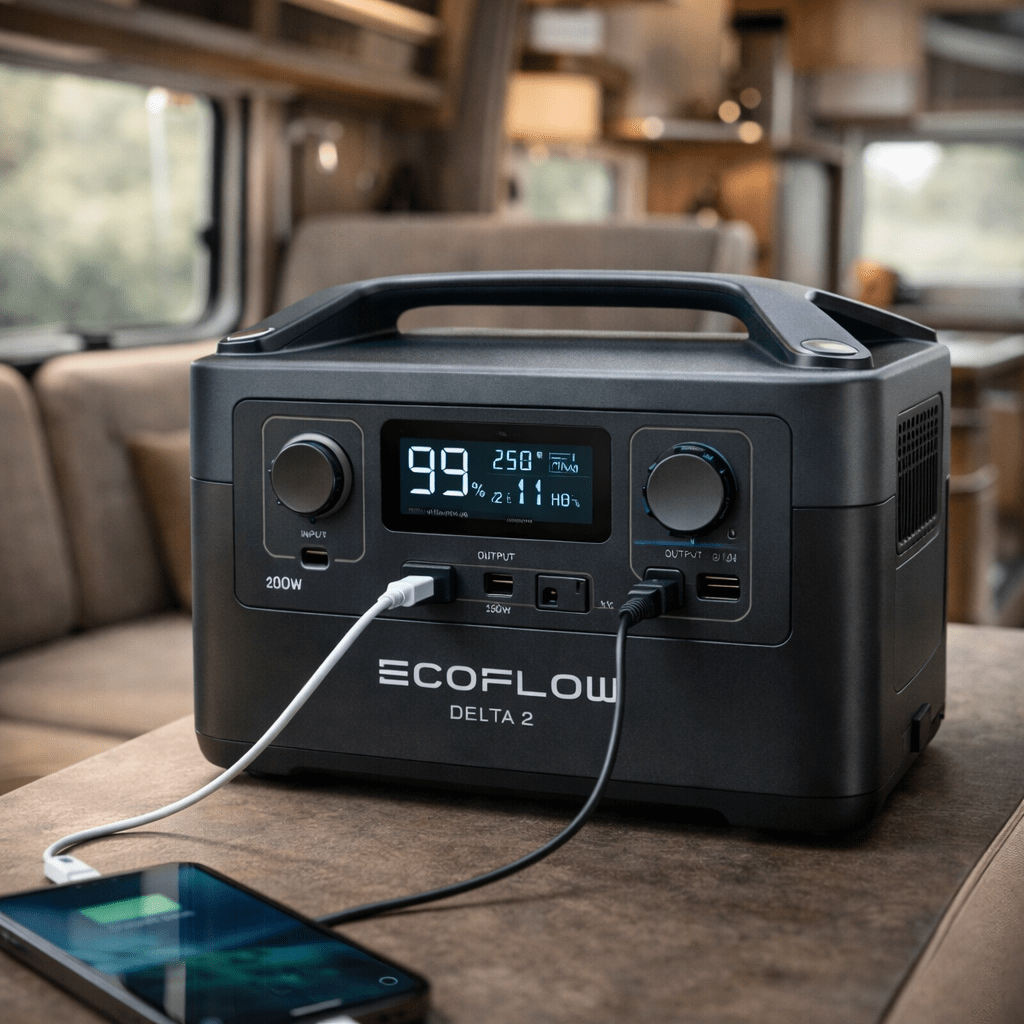
EcoFlow Delta 2 Portable Power Station
This is the serious one. 1024Wh capacity expandable further. 1800W output. It can run fridges, TVs, routers and even some kitchen appliances. If you work from home full time, this level of backup is peace of mind on another level.
Best for:
Full home backup for essentials, running a fridge, studio gear, routers and laptops simultaneously.
Things to keep in mind:
Higher upfront cost. Heavier unit. You are investing in real backup power.
What Size Do You Actually Need
Wattage explained simply
Watts are how much power something uses.
Watt hours are how long you can run it.
Example:
Laptop uses about 60W.
Router uses about 10W.
Fridge averages 100 to 200W depending on size.
A 500Wh station could theoretically run:
A 60W laptop for around 8 hours.
A 10W router for over 40 hours.
A 150W fridge for around 3 hours continuous.
Real world numbers vary, but this gives you a ballpark.
How to keep your WiFi running during a power cut
Okay okay okay I know I said you need a huge battery. You don’t.
Your router probably uses under 15W. Even a small 240Wh station can keep it alive for many hours. Add a small LED lamp and you’ve basically turned a blackout into a minor inconvenience.
Can a portable power station run a fridge
Yes. But capacity matters.
Small 200 to 300Wh units will struggle long term.
700Wh plus units are far more practical.
1000Wh plus is where it gets serious.
For foodie households like mine where I bake, batch cook and actually care about what’s in the fridge, higher capacity is worth it.
Are solar generators worth it in the UK
Solar charging works, even in the UK. It’s slower in winter, obviously. But pairing a portable power station with compatible solar panels gives you off grid flexibility.
For camping or as an emergency top up, it’s incredddible. Not a full house replacement, but a strong supplement.
Who actually needs one vs who doesn’t
You need one if:
You work from home
You run studio gear
You rely on stable WiFi
You store food you care about
You camp regularly
You probably don’t need one if:
You rarely experience outages
You only want to charge a phone occasionally
For me, after years of juggling cables in shared houses and protecting home studio sessions, portable power stations are not luxury gadgets. They’re practical infrastructure.
The Electronic Guide is supported by its readers and participates in affiliate marketing programs, including Amazon Associates. We may earn commissions from qualifying purchases made through links on this site, at no additional cost to you.
Some images featured on The Electronic Guide are digitally generated concept designs created for inspirational purposes. These visuals may not represent physical products or real life spaces exactly as shown.
All content is provided for informational and inspirational purposes only. While we strive for accuracy, we make no guarantees regarding product availability, pricing, specifications, or suitability. Please verify all product details directly with the retailer before purchasing.



 The Electronic Guide